
Search for the same service from Downtown Tampa, Westshore, Carrollwood, and Brandon and you may see four different local results. That is normal. Google Maps rankings are shaped partly by where the searcher is located, so one search from your office cannot represent your visibility across an entire market.
For businesses monitoring Google Maps rankings in Tampa, the practical question is not simply, “What position are we?” It is, “Where are we visible for the searches that matter, and where does that visibility turn into qualified leads?”
This guide explains why Google Maps rankings change by location, how Tampa's spread-out market affects what customers see, and how to measure coverage without confusing a service area with a guaranteed ranking area.
Key Takeaways
There is no single citywide Maps rank: Each search happens in a specific location, at a specific time, with a specific query and competitive set.
Distance matters: Google says local results are mainly based on relevance, distance, and prominence, so visibility usually changes as the searcher moves.
Service areas describe coverage: The neighborhoods listed on a Business Profile help customers understand where a business operates; they should not be treated as a way to erase distance.
A rank grid reveals the pattern: Tracking the same query from consistent points across Tampa shows where visibility is strong, weak, or changing.
Measure leads with visibility: Wider map coverage is useful only when the search terms, landing pages, calls, forms, and customers are relevant to the business.
The basic idea
Your business does not have one Google Maps ranking.
A traditional rank report can make local search look like a single scoreboard: one keyword, one city, one position. Maps does not work that neatly. Google evaluates the search in context, and the searcher's location is part of that context.
A person near Hyde Park may see a different three-pack than someone using the same phrase near the airport. Move north toward Carrollwood or east toward Brandon and the mix can change again. Different businesses become closer, different competitors become relevant, and the result set is recalculated.
The wording of the query also matters. “Dentist,” “emergency dentist,” and “cosmetic dentist Tampa” express different needs. A business can be relevant to one without being equally relevant to the others. Device signals, current data, and the information Google knows about a searcher's location can add more variation.
Google's framework
Relevance, distance, and prominence shape local results.
Google describes three main local ranking factors. They work together, which is why the closest business does not always win and the most established business does not appear first everywhere.
Relevance
How well the Business Profile and the business information Google can understand match what the person is searching for.
Distance
How far each potential result is from the searcher—or from the location implied in the query when a precise location is not available.
Prominence
How well known the business appears to be, informed by signals such as links, articles, directories, reviews, ratings, and organic web results.
These factors explain a common local pattern: a business may rank strongly near its verified location, fade farther away, and reappear in pockets where its relevance or prominence helps it compete. That pattern is not automatically a penalty or a technical problem.
It also explains why changing one field rarely produces uniform citywide movement. A better category or a more useful service page may improve relevance. Consistent reviews and local mentions may strengthen prominence. Neither removes the geographic relationship between the business and the searcher.
Market context
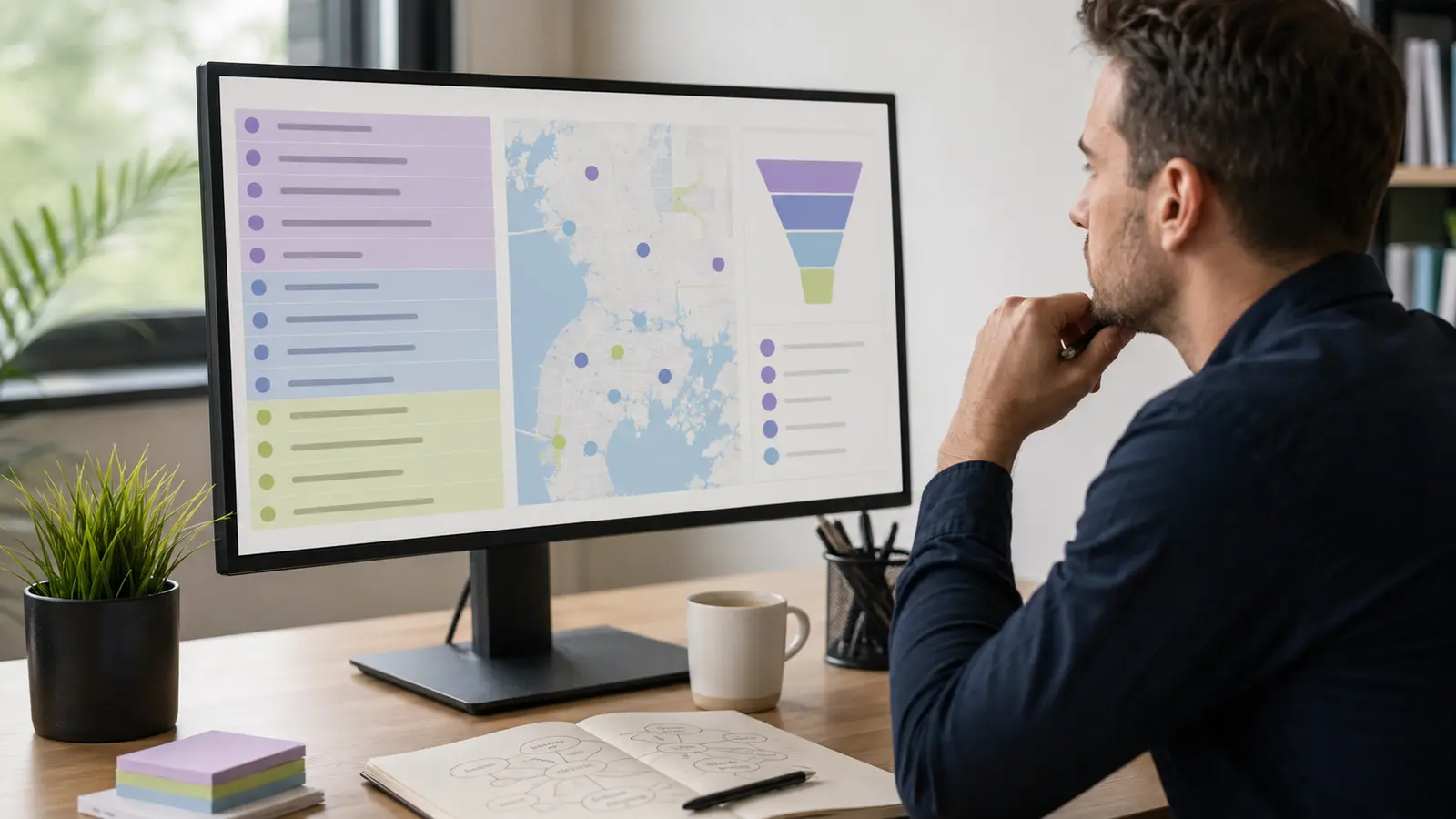
Tampa is not one search location.
Tampa's customers are distributed across distinct neighborhoods, business districts, suburbs, and nearby communities. Downtown, the Channel District, South Tampa, Seminole Heights, Westshore, Carrollwood, and New Tampa are not interchangeable points on a map. Cross into Brandon or Riverview and the competitive landscape changes again.
That matters because a local result is assembled for the searcher in front of Google—not for a marketer's idea of the whole Tampa Bay area. The larger the intended service territory, the less useful one manual search becomes.
Searcher location changes proximity
As the search point moves, some businesses become closer and others become farther away. This can change the map pack even when no business has edited its profile or website.
Neighborhoods have different competitors
A strong competitor near Westshore may have little presence in New Tampa. Another business may dominate a smaller pocket because its location, reviews, category, and web presence align well there.
Queries carry different geographic intent
“Near me,” a service-only phrase, and a phrase that explicitly includes “Tampa” can produce different results. Track the language customers actually use rather than assuming one city-modified keyword represents every search.
Business fit changes by service
A company may deserve broad visibility for one specialized service but only narrow visibility for a highly competitive general service. Measure each revenue-driving category separately.
A common misconception
A Business Profile service area is not a ranking radius.
Google allows eligible service-area and hybrid businesses to list the cities, ZIP codes, or other areas they serve. That information tells customers where the business can provide products or services. It does not turn every listed neighborhood into an equal ranking zone.
Use service areas to describe real operational coverage. Google currently allows up to 20 areas and advises businesses to be specific and accurate. Businesses that do not serve customers at their address should follow Google's rules for hiding that address rather than using a virtual office or creating extra profiles for places without legitimate staffed locations.
If a company is based in one part of the market, adding Downtown, Westshore, Carrollwood, and New Tampa to the profile does not make the physical distance between those places disappear. The profile still needs to be relevant and prominent, and Google still considers distance.
Measure the market
Use grid tracking to see your real Tampa reach.
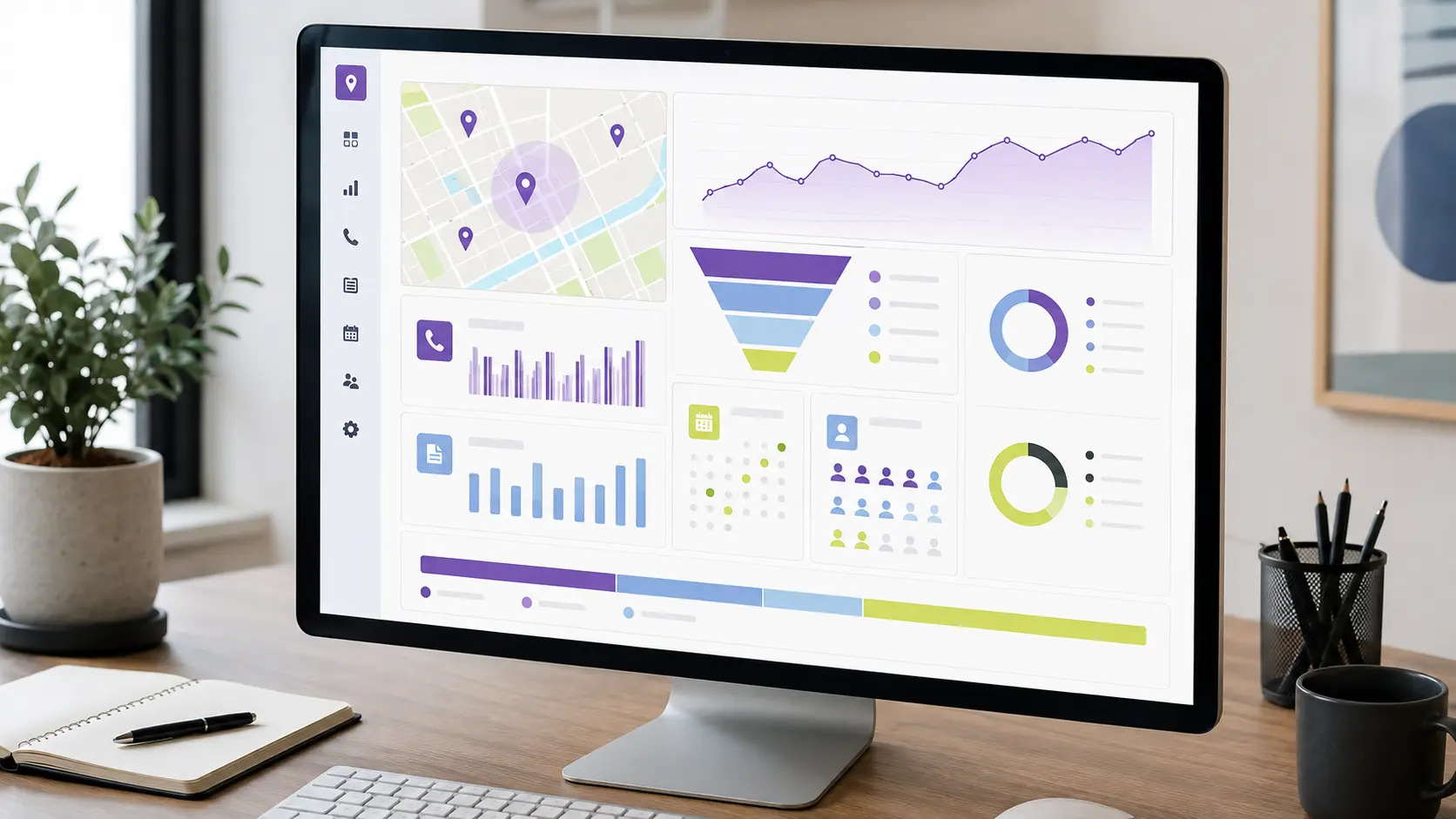
A local rank grid checks the same query from a set of geographic points. Instead of reporting one position for “Tampa,” it creates a picture of how rankings change across the selected area.
Grid data is most useful when the settings stay consistent. Use the same keywords, grid center, distance between points, device assumptions, and reporting schedule. Otherwise, apparent improvement may come from changing the test rather than changing visibility.
Choose valuable searches
Track a focused set of services tied to real revenue, not every variation a tool suggests.
Cover the real market
Place the grid over areas the business genuinely serves and where likely customers are concentrated.
Keep settings stable
Repeat the same test over time so changes in the map reflect the market rather than the reporting setup.
Pair rank with leads
Compare visibility with calls, forms, direction requests, booked work, and lead quality by service and area.
How to read common grid patterns
A grid is a diagnostic tool, not a promise of precision. Results can vary by provider, timing, and test configuration. Look for stable patterns and meaningful changes rather than treating every individual point as an absolute truth.
Practical improvements
What a Tampa business can actually improve.
You cannot optimize proximity away. You can make the business a clearer, more trusted, and more useful match for the customers it can realistically serve.
Make the offer easy to understand
- Choose accurate primary and secondary Business Profile categories
- Keep services, hours, website, phone number, and location details complete
- Create substantial service pages that answer the questions behind each search
- Use Tampa context where it helps customers, without repeating city names mechanically
- Link the profile to the most useful page for the business and its customers
Earn trust across the market
- Ask customers for honest reviews through a consistent process
- Respond to reviews and address recurring service problems
- Keep important directory and map information accurate
- Earn relevant local coverage, partnerships, links, and mentions
- Publish useful expertise that supports—not duplicates—core service pages
Start with a complete Google Business Profile optimization review. Then connect the profile to a website that clearly explains each service, demonstrates real experience, and gives visitors a useful next step.
Beyond the map pack
Your website can reach customers where Maps visibility fades.
Maps is only one part of local search. Strong service pages, helpful resources, and location-relevant proof can earn organic visibility for people searching across a larger area. That does not guarantee map-pack placement, but it gives the business another way to be discovered and evaluated.
Avoid creating near-duplicate pages for every Tampa neighborhood. A location page should exist because the business has something useful and specific to say—such as a legitimate location, distinct service information, local examples, or customer guidance—not because a list of neighborhood names is available.
Use our step-by-step local SEO strategy to connect the website, Business Profile, reviews, content, and authority. Then apply the local SEO measurement framework so rankings stay connected to leads and revenue.
Use this in your next review
Tampa map visibility checklist.
Define the services and queries most closely tied to qualified revenue
Map the neighborhoods and communities the business can realistically serve
Track Maps and organic website visibility separately
Use consistent grid points and settings for every comparison
Review each important service rather than relying on one broad keyword
Confirm the Business Profile is verified, eligible, complete, and accurate
Use service areas to describe real coverage—not as a ranking shortcut
Compare weak grid areas with nearby competitors and search intent
Improve service pages, internal links, reviews, listings, and local authority
Avoid duplicate profiles, virtual offices, and thin neighborhood pages
Pair visibility trends with calls, forms, bookings, and qualified leads
Document meaningful changes before judging whether the strategy worked
Measure local reach as a pattern, not a single position.
Changing results across Tampa neighborhoods do not automatically mean something is broken. They reflect a local system in which the searcher's location, the query, the business, and the surrounding competition all matter.
Track the market consistently, improve the signals you can control, and judge progress by qualified business outcomes. If you need help connecting those pieces, explore our Tampa local SEO services or request a local visibility review.